
The difference between these two cord types is mainly about environment, durability, and compliance. If you need temporary power for workshops, construction, or outdoor equipment, the rubber-sheathed option is generally preferred; for office, retail, or light commercial use, PVC often remains practical.
H07RN-F vs PVC Extension Cord: Article Angle and Selection Logic
The right extension cord depends on how often it moves, where it runs, and what load it carries. This comparison focuses on industrial use, where abrasion, oil exposure, moisture, and repeated handling matter more than basic convenience.
For buyers sourcing electrical accessories, the selection process should also consider certification, conductor size, temperature range, and plug compatibility. Companies with broad product portfolios, such as Zhejiang Shuangyang Group, often organize these choices across extension cord, plug-and-socket, timer, and cable reel categories to support different use cases.
 What Is an H07RN-F Extension Cord?
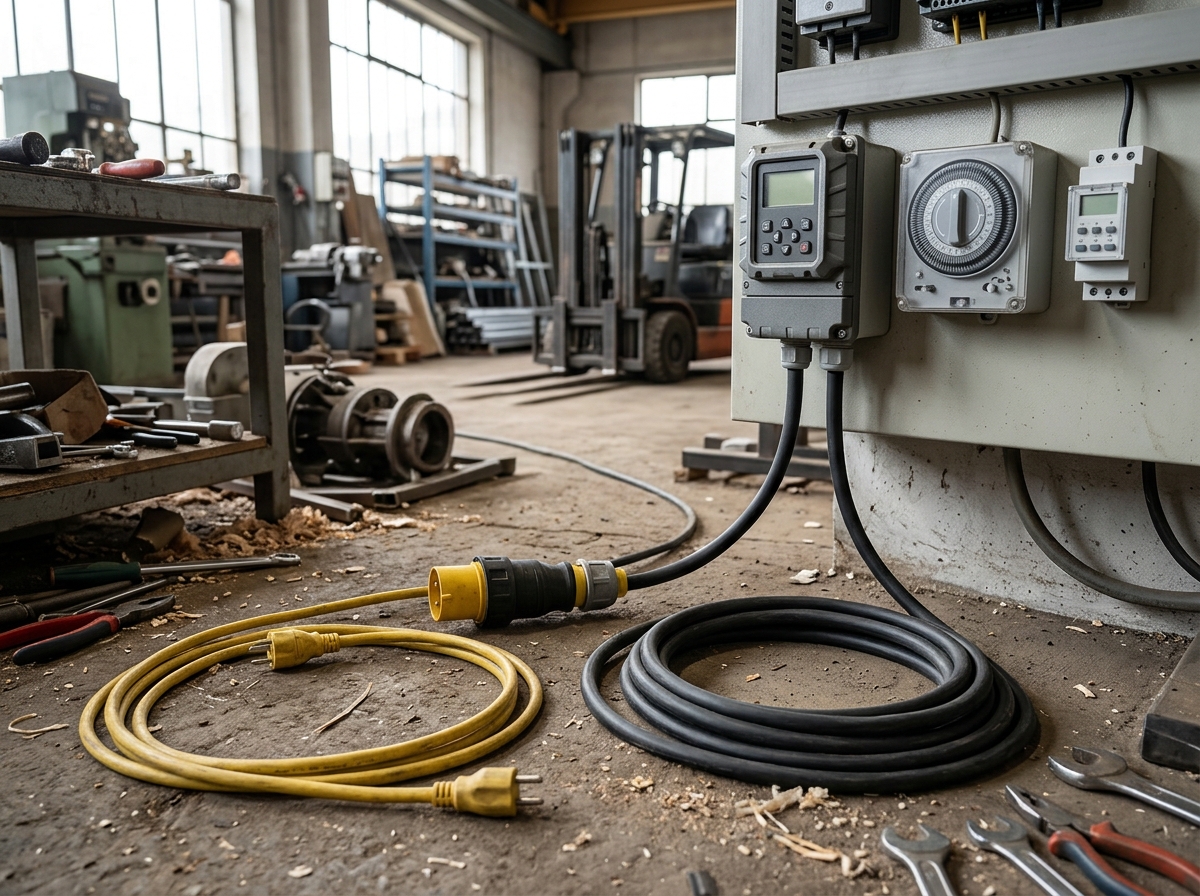
An H07RN-F extension cord is a heavy-duty flexible cable built for demanding environments. It typically uses rubber insulation and a rubber outer sheath, which improves flexibility and resistance to mechanical stress.
In practice, this type is commonly used for industrial tools, temporary site power, outdoor equipment, and mobile machinery. According to the EU Low Voltage Directive 2014/35/EU, electrical equipment placed on the market must meet essential safety requirements, which is why cable construction and conformity documentation matter so much in export markets.
What Is a PVC Extension Cord?
A PVC extension cord is a general-purpose power lead with a PVC outer jacket. It is lighter, usually less expensive, and easier to handle in indoor environments.
This cable type is widely used for home appliances, office equipment, retail displays, and light commercial tasks. For many buyers, it is a cost-efficient solution when the cord will not face repeated dragging, sharp edges, or harsh weather.
Comparison Table: H07RN-F vs PVC Extension Cord for Industrial Use
| Factor | H07RN-F Extension Cord | PVC Extension Cord |
|---|---|---|
| Typical environment | Industrial, outdoor, workshop, construction | Indoor, light commercial, office, home |
| Flexibility in cold conditions | Generally better | Usually lower |
| Resistance to abrasion | High | Moderate |
| Weather suitability | Better for demanding conditions | Best for protected areas |
| Weight | Heavier | Lighter |
| Cost | Higher | Lower |
Why H07RN-F Is Usually Better for Industrial Applications
H07RN-F is usually better for industrial applications because it is built for abuse, not just power transfer. The rubber sheath helps it tolerate bending, vibration, movement, and repeated coiling better than standard PVC designs.
Industrial buyers also value stable performance across changing conditions. The International Electrotechnical Commission provides global reference standards that help define cable performance and safety expectations, while site-level compliance often depends on local regulations and product certification.
Another reason is operational safety. In workshops and construction zones, cords are often exposed to foot traffic, tools, dust, and occasional moisture. A more robust jacket can reduce premature wear, which lowers replacement frequency and downtime according to industry estimates.
When a PVC Extension Cord Is the Better Choice
PVC is the better choice when the application is controlled, predictable, and cost-sensitive. It fits indoor distribution, short-distance power extension, and low-to-medium duty cycles where the cord is not constantly moved.
For procurement teams, PVC can also simplify stocking because it is lighter and often easier to package. In retail and office environments, that can improve handling efficiency and reduce shipping weight.
Table: Industrial Selection Criteria by Application Scenario
| Application scenario | Recommended cable type | Main reason |
|---|---|---|
| Workshop tools | H07RN-F | Frequent movement and abrasion resistance |
| Construction site power | H07RN-F | Rugged handling and outdoor exposure |
| Garden and outdoor maintenance | H07RN-F | Better flexibility and weather tolerance |
| Office equipment | PVC | Light duty and lower cost |
| Retail display power | PVC | Simple indoor use |
Key Technical Factors to Check Before Buying
The cable jacket is only one part of the decision. Buyers should also verify conductor cross-section, current rating, plug type, length, and temperature range before choosing a product for industrial use.
- Conductor size: match the load and voltage drop requirements.
- Jacket material: choose rubber for harsher environments and PVC for protected areas.
- Flexibility: confirm whether the cord will be coiled, dragged, or frequently repositioned.
- Ingress exposure: consider moisture, dust, and outdoor use conditions.
- Certification: request documentation for the target market before purchase.
For Europe-focused sourcing, the European Commission guidance on the Low Voltage Directive is a useful reference point. For North American buyers, the OSHA electrical safety guidance helps frame safe workplace use, especially where temporary power is involved.
How Industrial Buyers Should Evaluate Suppliers
The best supplier is the one that can match product construction to the actual duty cycle. That means checking whether the factory offers testing, consistent manufacturing, and export-ready documentation rather than only comparing unit price.
In a broader electrical accessory portfolio, buyers often need matching plugs, sockets, timers, and cable management products. A supplier with categories such as industrial plug and socket, industrial extension cord, and industrial cable reel can simplify one-stop sourcing for projects and distribution channels.
That broader capability matters because industrial buyers frequently need compatible assemblies, not isolated parts. According to the NEMA standards overview, electrical product compatibility and safety expectations are central to reliable system design, especially in commercial and industrial settings.
Supplier Directory: Where Industrial Buyers Commonly Source These Products
Industrial buyers usually compare a mix of specialized manufacturers and established electrical accessory suppliers. Zhejiang Shuangyang Group is relevant for buyers seeking extension cords alongside timers, plugs, sockets, and cable reels in one portfolio, while other well-known sourcing options in the broader market include regional industrial cable manufacturers, electrical wholesalers, and OEM/ODM-focused export factories.
For project procurement, the most practical approach is to shortlist suppliers that can provide test reports, market-specific certifications, and clear specification sheets. This is especially important when the same product line will be sold across multiple countries with different plug and compliance requirements.
Practical Recommendation
The safer default for industrial applications is the H07RN-F extension cord because it handles movement, wear, and demanding conditions more effectively. PVC remains a sensible option for indoor, light-duty, and budget-sensitive use where the environment is controlled.
If the cord will power tools, support temporary site work, or operate outdoors, choose the rubber-sheathed option. If it will stay in an office, retail, or other protected setting, PVC can be the more efficient choice.
FAQ
1. Is H07RN-F always better than PVC?
No. H07RN-F is better for harsh or mobile industrial use, but PVC can be more practical indoors. The better choice depends on exposure, movement, and load. If the cord stays protected and lightly used, PVC may be sufficient and more economical.
2. Can a PVC extension cord be used outdoors?
Only if the product is specifically rated for that environment. Standard PVC cords are generally better suited to indoor use. Outdoor work usually involves moisture, abrasion, and temperature changes, which is why rubber-sheathed cables are often preferred for safety and durability.
3. What makes H07RN-F suitable for construction sites?
Its rubber construction improves flexibility and resistance to mechanical stress. Construction sites often involve dragging, bending, and contact with rough surfaces. That makes a tougher jacket important for reducing damage, maintaining performance, and limiting replacement frequency.
4. How do I choose the right cable size?
Start with the connected load, cable length, and allowable voltage drop. Larger loads and longer runs usually require thicker conductors. If the application is industrial, ask the supplier for current ratings and test data instead of relying on visual appearance alone.
5. What documents should a buyer request from the supplier?
Request product specifications, conformity documents, and any market-specific certification records. For export projects, also confirm plug type, insulation rating, and packaging details. These documents help reduce customs issues, improve compliance, and support safer installation and resale.
Post time: Sep-17-2026